
Spray Foam Roofing Phoenix, AZ
Phoenix's Spray Foam Roofing Specialists — Built for the Valley's Heat
Built for Phoenix heat, not just Arizona weather. We spec every SPF install, recoat and repair around Sky Harbor-area surface temperatures, the urban heat island, and the Valley's June–September monsoon window — not a generic statewide climate profile. Free, no-obligation estimates across Phoenix and the close-in Valley.
What is SPF roofing?
What Is Spray Foam Roofing?
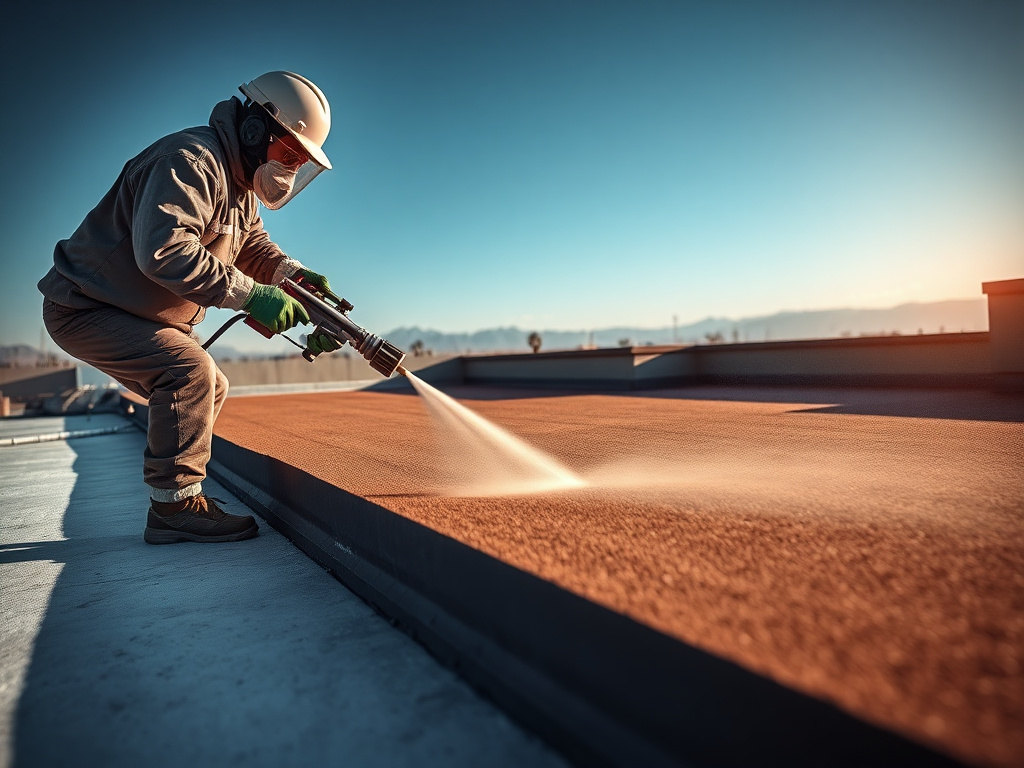
Spray polyurethane foam (SPF) roofing is a two-component liquid that expands on contact into a rigid, closed-cell foam, then gets sealed under a protective silicone or acrylic topcoat. The result is a monolithic, seamless membrane applied directly on your existing deck or substrate — no fasteners rows, no overlapping sheets, and no seams for wind, water, or foot traffic to work loose over time.
Because the foam is sprayed rather than laid in sections, it self-flashes around penetrations, HVAC curbs, and parapet walls, and it can be built up in tapered layers to correct low spots in the same application. For a Phoenix roofer, that combination — insulation value, waterproofing, and slope correction in one system — is what makes SPF the right call for the Valley's overwhelmingly flat and low-slope roof stock, residential and commercial alike.
The topcoat is what does the day-to-day work once the foam is down. Silicone topcoats hold up well against ponding water and UV load, which matters on a flat Phoenix roof that sees ninety-plus days a year over 100°F. Acrylic topcoats cost less up front and recoat cleanly on a maintenance cycle. Either way, a well-maintained SPF roof is designed to be recoated rather than replaced — routine recoats every several years extend the life of the same foam substrate instead of starting over with a tear-off.
The Phoenix difference
Why Phoenix Roofs Take More Damage Than the Rest of the Valley
Phoenix isn't just hot — it's measurably hotter than the towns around it. The urban heat island effect means Sky Harbor-area temperature readings regularly run 10–14°F above outlying communities like Wickenburg, Queen Creek, and Casa Grande, and decades of urbanization have pushed Phoenix's nighttime minimum temperatures up roughly 9°F over the last fifty years. Asphalt, concrete, and rooftop mass hold that heat well past sunset, so a Phoenix roof never really gets a break — it heats up faster in the morning and stays hot longer at night than a roof thirty miles out.
On the roof surface itself, that shows up as real numbers: Phoenix roof surface temperatures regularly exceed 150–170°F at peak summer, and attic space below an unprotected roof can hit roughly 160°F in July. That's not a comfort problem — it's a materials problem. Traditional membranes expand, contract, and fatigue faster under that cycling, and seams are exactly where that fatigue turns into a leak.
Then the monsoon arrives. Arizona's monsoon season is a fixed National Weather Service window — June 15 through September 30 — and Phoenix's version of it includes haboobs: dust storms that can stand up to roughly 5,000 feet tall and 100 miles wide, moving in on an advancing front at 30–60 mph, followed by wind-driven rain and occasional hail. A roof that's already heat-fatigued from months of urban-heat-island cycling is exactly the roof that fails first when a haboob front hits.
SPF answers the urban heat island problem directly, not generically. The foam itself is a continuous insulating layer with no thermal bridging at seams, and the reflective topcoat cuts the roof-surface temperature that's driving the cycling in the first place. Because the membrane is fully adhered and seamless, it doesn't have the failure points that wind-driven monsoon rain and haboob pressure find in a lapped or fastened system.
Urban heat island (UHI)
- ✓10–14°F hotter than outlying Valley towns at Sky Harbor readings
- ✓~9°F rise in nighttime minimum temps from 50 years of urbanization
- ✓150–170°F+ roof surface temps at peak summer
- ✓~160°F attic temps common in July under unprotected roofs
Monsoon exposure (June 15–Sept 30)
- ✓Haboobs up to ~5,000 ft tall and ~100 miles wide
- ✓Advancing dust fronts moving 30–60 mph
- ✓Wind-driven rain and occasional hail behind the front
- ✓Heat-fatigued seams are the first failure point in a storm
Built for Valley roof stock
Built for the Way the Valley Actually Builds
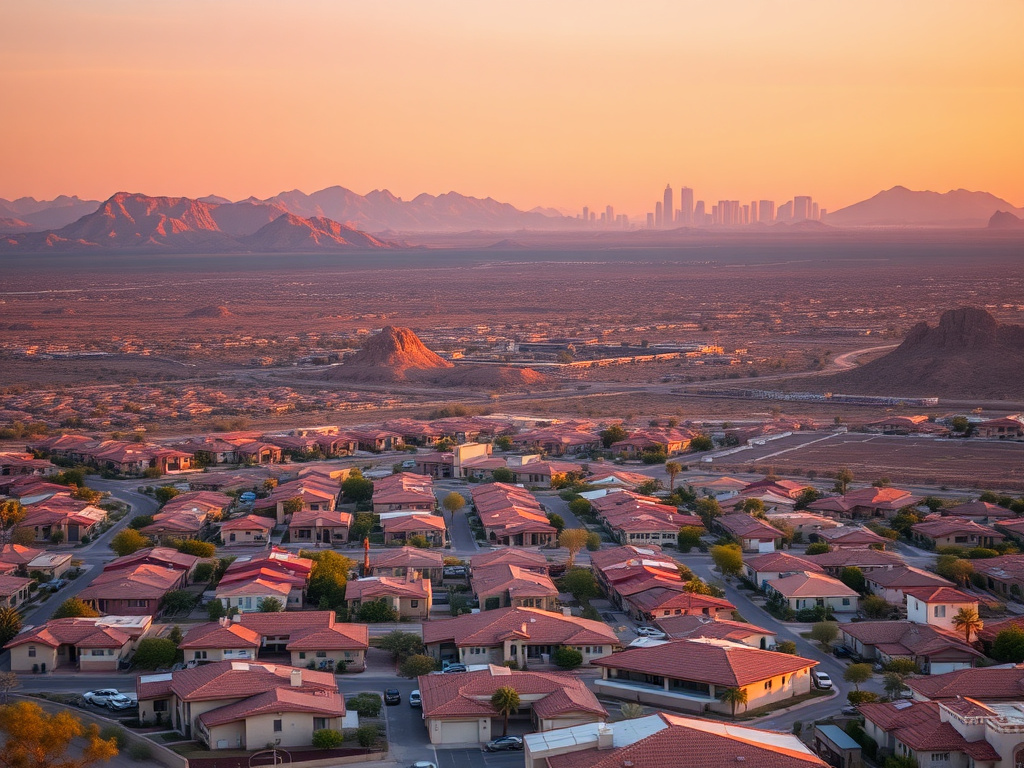
Phoenix and the close-in Valley are dominated by dead-flat and low-slope roof stock, and each type comes with its own SPF spec. Thousands of 1960s–1980s Phoenix ranch homes carry original built-up or foam roofs that are due for a recoat or full recover. Strip malls, warehouses, and industrial buildings across the metro run large, membrane-covered flat roofs where downtime during application is a real business cost. And a growing share of Valley rooftops sit inside HOA-governed master-planned communities — Ahwatukee, Chandler, Gilbert, Paradise Valley, and parts of Scottsdale and Mesa — where an architectural review committee, not just a building code, decides what a roof is allowed to look like.
We spec SPF differently for each of those three situations, and for HOA communities specifically, color and visibility compliance is part of the job from the first site visit, not an afterthought. A recover on a 1970s ranch home needs a moisture scan before anything gets sprayed, since trapped moisture under an old built-up roof will fail a new foam system just as fast as it failed the old one. A strip-mall roof needs a phased plan so tenants stay open during application. And an HOA-community roof needs a topcoat color and finish that will actually clear architectural review the first time, not after a resubmission.
Services
Spray foam roofing services for Phoenix and the Valley

SPF Roof Installation
Seamless spray polyurethane foam roofing installed on new construction and full reroofs across the Valley.
Explore this service →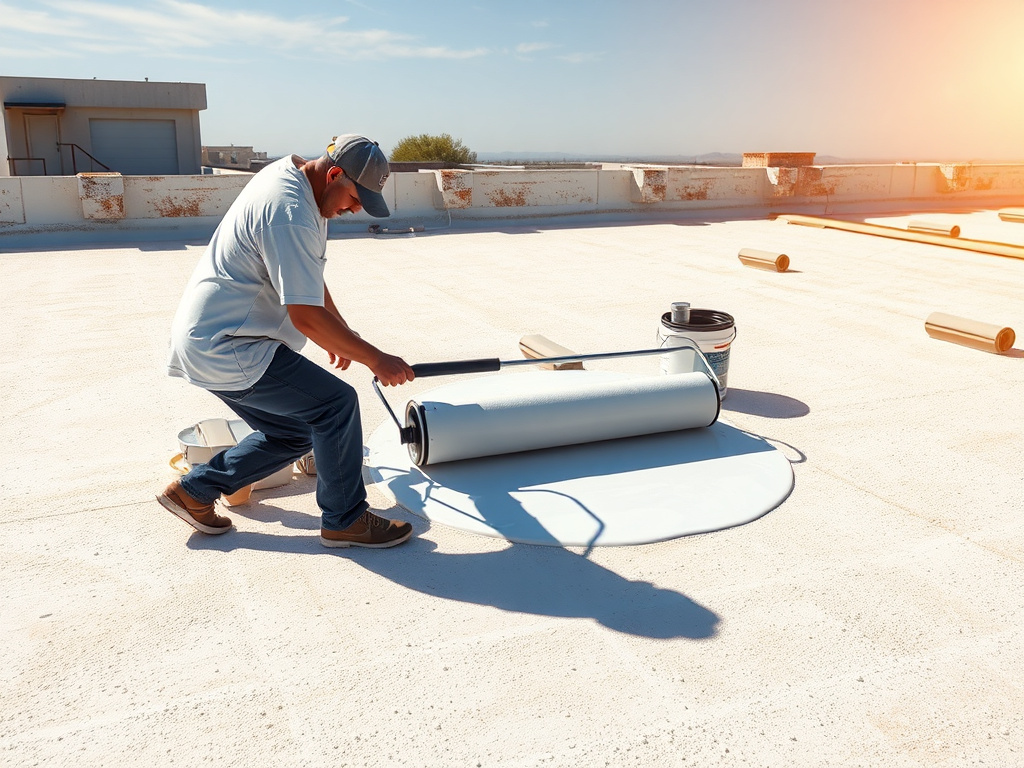
Foam Roof Recoating
Silicone and acrylic recoat cycles that extend an existing SPF roof's life without a tear-off.
Explore this service →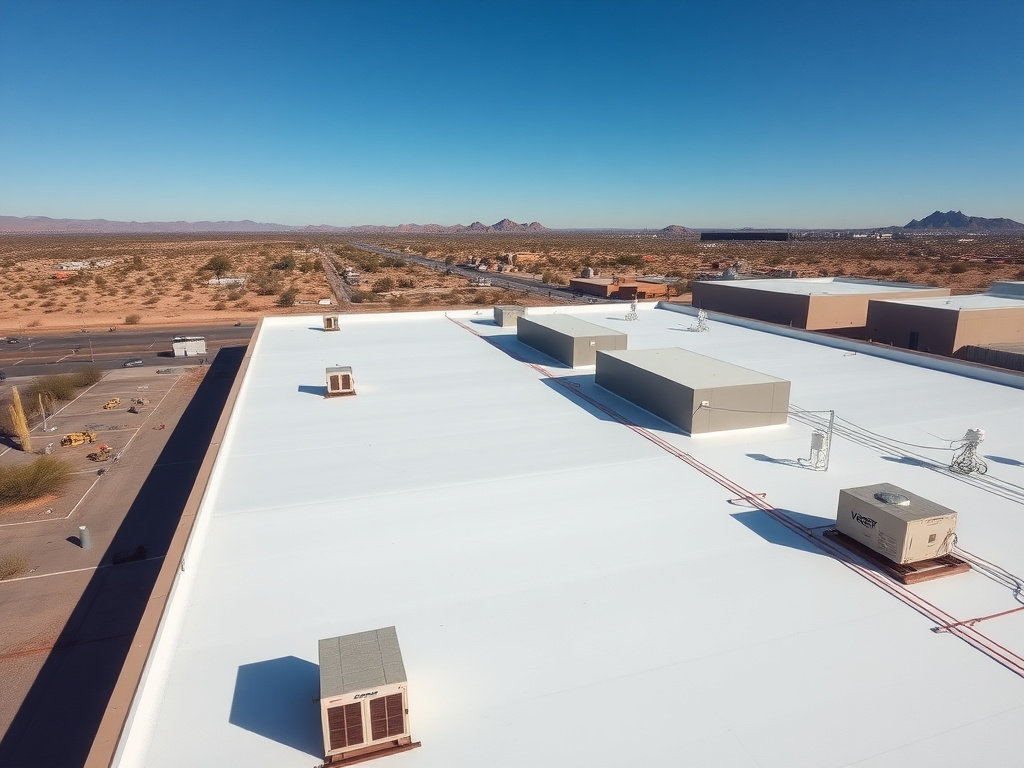
Commercial Flat Roof Foam Systems
High-build seamless systems for Phoenix strip malls, warehouses, and office parks — installed with minimal downtime.
Explore this service →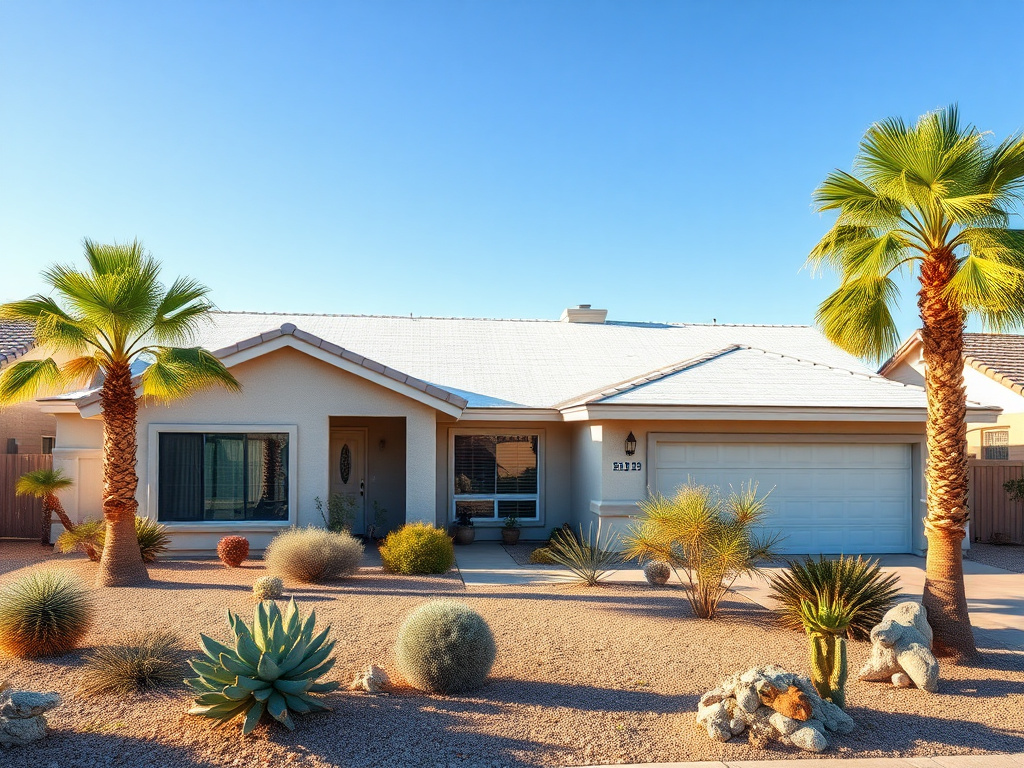
Residential Spray Foam Roofing
Foam roofing for Valley ranch homes and low-slope additions, built for extreme heat and monsoon wind.
Explore this service →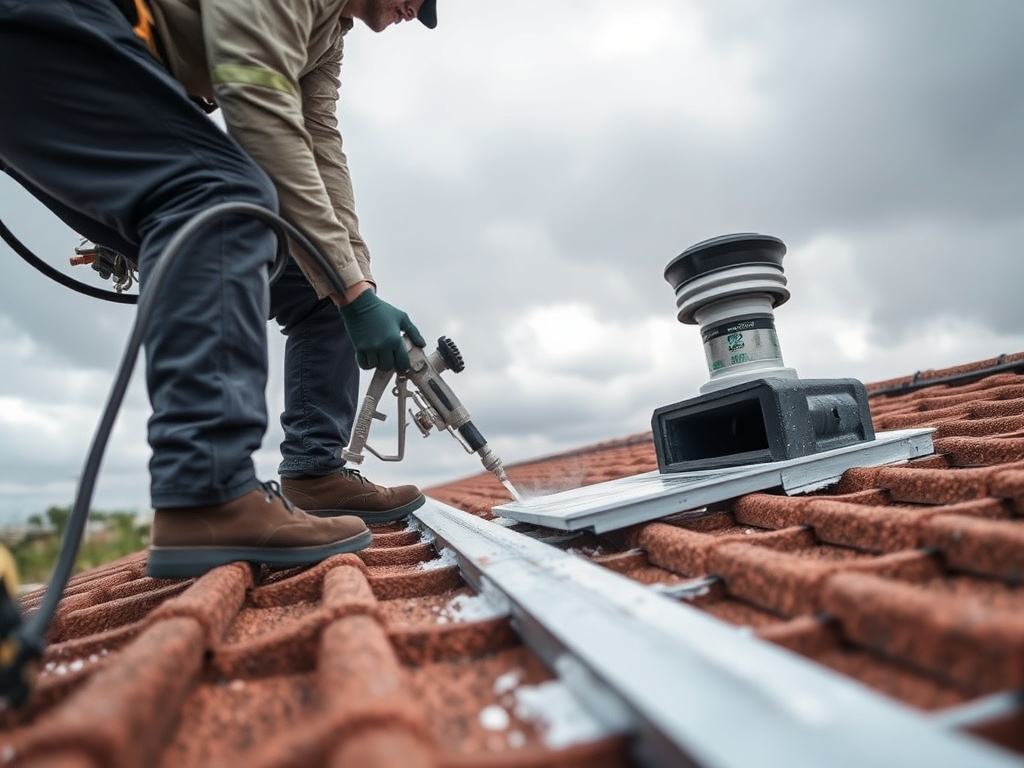
Roof Leak Repair
Foam-based leak repair that seals penetrations and seams before monsoon season turns a small leak into a big one.
Explore this service →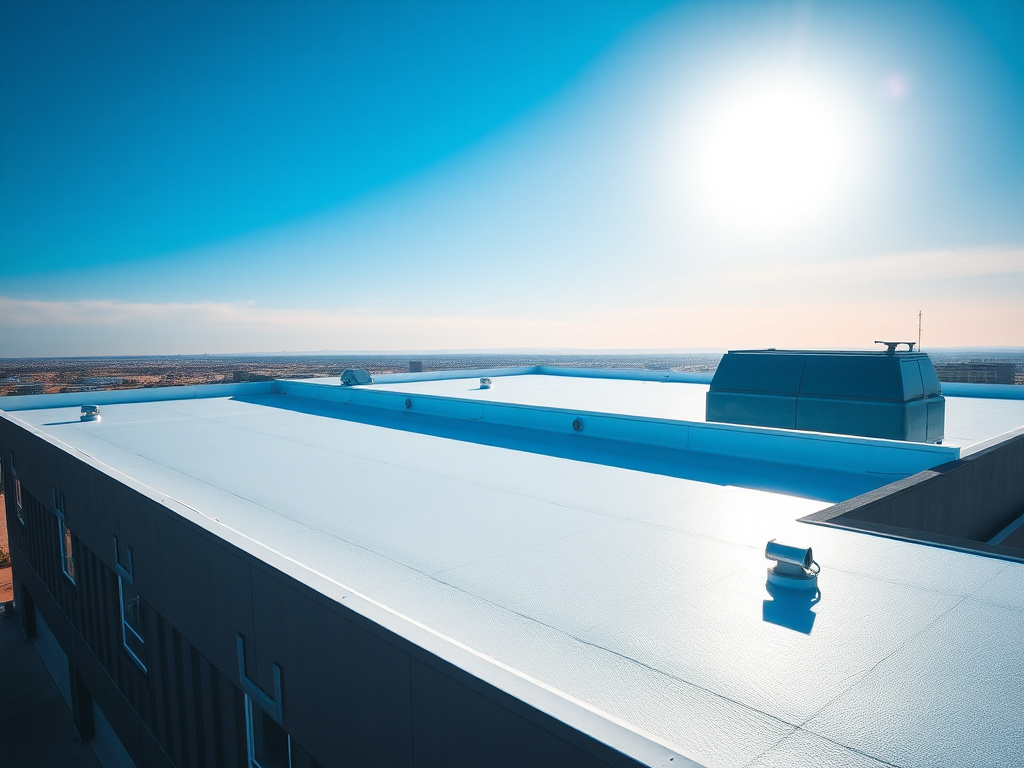
Cool Roof & Energy Rebates
Reflective coatings that cut roof-surface temperature and summer cooling costs, with SRP and APS rebate guidance.
Explore this service →
Roof Maintenance Programs
Scheduled inspections and recoat planning that catch UV and monsoon damage before it becomes a leak call.
Explore this service →
Tapered Insulation & Ponding Water Correction
Tapered foam systems that re-slope flat roofs to eliminate standing water after Phoenix's monsoon downpours.
Explore this service →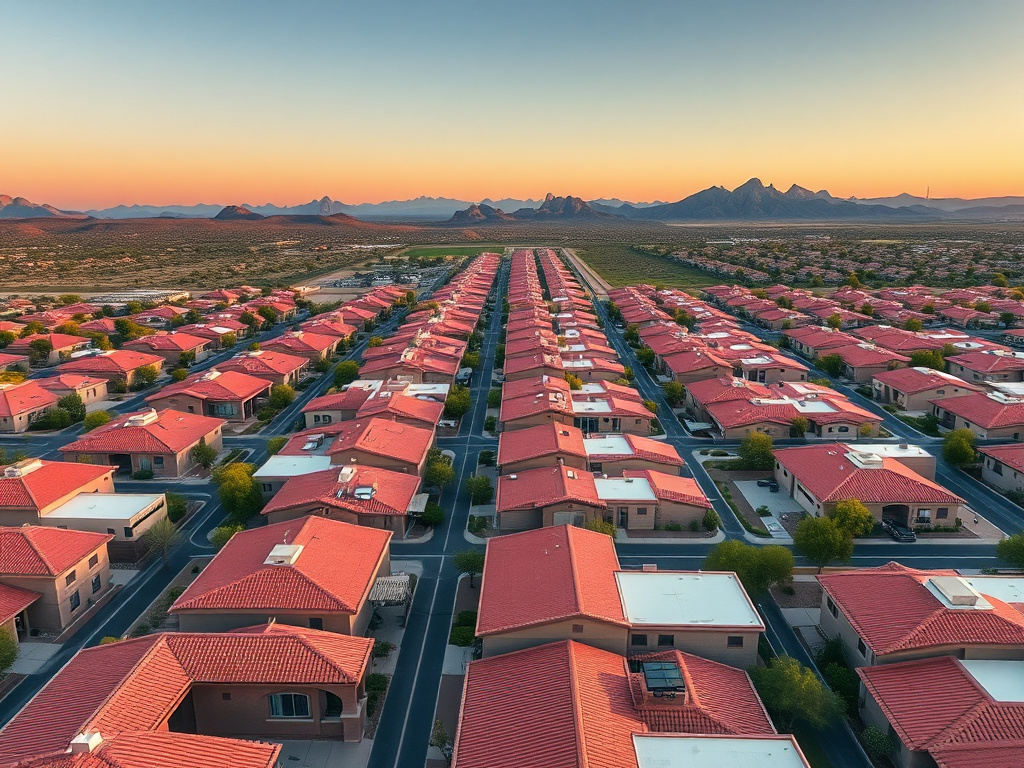
HOA-Compliant Roofing
Color and visibility options that satisfy Valley master-planned community architectural guidelines.
Explore this service →Two paths in
Residential Roof or Commercial Building — Either Way, Same Crew
Residential SPF roofing
Ranch homes, additions, and patio roofs across Phoenix, Scottsdale, Tempe, Mesa, and Chandler — new install, recoat, or repair, specced for heat load and, where it applies, HOA color rules. Most residential jobs in our footprint are recoats on an existing foam roof or a full recover over an aging built-up roof, and both start with the same on-roof inspection before we write a number.
Residential roofing details →Commercial flat roof systems
Strip malls, warehouses, and office parks running large low-slope roofs, installed with minimal downtime and tapered slope-to-drain correction where ponding water is an issue. We phase larger commercial jobs section by section so tenants and operations can keep running while the roof gets done.
Commercial roofing details →How it works
Our SPF Roofing Process, Start to Finish
Inspect
We walk the roof, check the substrate, and note ponding, penetrations, and existing coating condition before quoting anything.
Tear-off or recover
We determine whether the existing roof can be foamed over as a recover or needs a tear-off — driven by substrate condition, not upsell.
Tapered foam application
Foam is sprayed in tapered layers where needed to slope the roof to drain, eliminating standing water in the same pass.
Topcoat
A silicone or acrylic topcoat seals and protects the foam, providing the UV resistance and reflectivity that carries the roof's cool-roof performance.
Inspect & warranty
A final walk-through confirms full application and thickness before we close out the job and warranty paperwork.
Cool roof Phoenix
Cool Roof Code & Rebates in Phoenix
The City of Phoenix requires low-slope roofs (under a 2:12 pitch) on new construction, and re-roofs affecting more than 50% of the roof area, to meet a minimum initial solar reflectance of 0.70 and thermal emittance of 0.75. SPF topcoats are built to clear that bar.
SRP and APS both run cool-roof rebate programs — SRP has offered around $0.30/sq ft (up to $600) for qualifying residential roofs and $0.10–$0.20/sq ft for commercial, while APS has offered roughly $0.75/sq ft up to $50,000 per customer. Program terms and dollar amounts change, so confirm current details and amounts with SRP, APS, or City of Phoenix Development Services before relying on any figure — we'll help you pull the current paperwork rather than quote you a promise.
The practical upside of a high-reflectance topcoat shows up in the same place the urban heat island problem does: less heat transferred through the deck means less work for the air conditioner on a roof that's already carrying a heavier thermal load than roofs outside the metro. A code-compliant cool roof and a rebate-eligible cool roof are usually the same roof — we spec to both at once.
Service area
Spray Foam Roofing Across Phoenix and the Close-In Valley
We work Phoenix proper and the close-in cities that share its heat and building profile: Scottsdale, Tempe, Mesa, Chandler, Gilbert, Paradise Valley, Glendale, and Ahwatukee. If your roof sits inside that footprint, the crew that shows up for an inspection is the same crew that comes back to install, recoat, or repair it — not a subcontractor pulled in from outside the Valley for the day.
Staying close-in matters for scheduling, too. A monsoon-driven repair call in Tempe or a rebate-paperwork question from a Gilbert HOA board doesn't sit in a queue behind jobs three hours away in another part of the state.
Common questions
Frequently Asked Questions
Is spray foam roofing actually different from a generic Arizona roof coating?
+
Yes. SPF is a fully-adhered, seamless insulating membrane sprayed on-site and then sealed under a protective topcoat — it isn't a coating applied over an existing roof type, and it isn't the same product line marketed for cooler parts of the state. In Phoenix specifically, we spec foam thickness and topcoat chemistry around urban-heat-island-driven surface temperatures and the June 15–September 30 monsoon window, not a one-size-fits-all Arizona spec.
Will an SPF roof meet City of Phoenix cool-roof code?
+
SPF systems are built to hit and exceed the City of Phoenix's minimum reflectance and emittance thresholds for low-slope roofs. We'll confirm the current code language and your specific project's applicability with City of Phoenix Development Services before final spec.
Can I get an SRP or APS rebate for a foam roof?
+
Often, yes — SRP and APS both run cool-roof rebate programs for qualifying reflective roofing. Amounts and eligibility change, so we'll walk you through the paperwork and point you to SRP, APS, or the City for the current figures rather than quote you a number we can't guarantee.
Does foam roofing work with my HOA's color rules?
+
Most master-planned Valley communities allow SPF roofing — the topcoat can be tinted or finished with a granulated cap sheet to match tile or shingle-adjacent color requirements. We handle the spec sheets your architectural review committee will ask for.
From the blog
Phoenix Roofing Guides & Resources
Heat, cool roofs & rebates
Our flagship guide walking through Phoenix's urban heat island, City cool-roof code, and how SRP/APS rebate programs actually work — including the reflectance and emittance numbers an inspector will actually check.
Monsoon prep for flat roofs
What to check before June 15 — ponding water, seam condition, drain clearance, and haboob-driven wind exposure on a Phoenix flat roof before the first storm front rolls through.
HOA roofing compliance
How SPF topcoat color and cap-sheet options fit inside Ahwatukee, Chandler, and Gilbert-style architectural review requirements.
Get a free roof inspection & quote
Tell us about your roof — age, size, and what's going wrong. We'll come back with a scoped, itemized number — no obligation.