Utility Savings & Code Compliance
Cool Roof Coatings Phoenix — Energy Savings, SRP & APS Rebates, and City Code
A reflective spray foam roof coating is one of the few upgrades that touches your cooling bill, your roof's lifespan, and — for commercial and multifamily properties — an actual City of Phoenix code requirement, all at once. Here's how the reflectivity works, what SRP and APS currently offer toward it, and what the city's low-slope roof code requires.
A different kind of service page
Not a generic "energy efficient roofing" pitch — a Phoenix utility and code page
Plenty of contractors will tell you a light-colored roof is "more energy efficient." That's true as far as it goes, but it skips the two things that actually change a Phoenix property owner's decision: whether a specific utility rebate applies to your project right now, and whether your building is subject to an actual reflectance requirement under City of Phoenix code. This page exists to answer both, with real program figures rather than a vague efficiency assertion.
The short version: Salt River Project (SRP) and Arizona Public Service (APS) both run named cool-roof rebate programs with dollar-per-square-foot incentives, and the City of Phoenix has a reflectance and emittance requirement for most new or re-roofed low-slope commercial and multifamily buildings. All of it is covered below, section by section — and every dollar figure and code threshold on this page carries the same note: confirm current program details and amounts with SRP, APS, or City of Phoenix Development Services before relying on any specific number. Utility programs and code cycles change, and we're not going to present rebate math as a guarantee.
This page is written for two different readers, and both will find what they need below. If you're a homeowner weighing a recoat or new install and wondering whether a rebate offsets part of the cost, the SRP and APS sections give you the current structure of each program. If you're a property manager or facility owner scoping a commercial re-roof, the City of Phoenix code section tells you whether reflectance and emittance minimums apply to your project at all — a question that surprises more commercial owners than you'd expect, since it's easy to assume a code requirement like this only exists in coastal or northern climates.
Why this matters more here
R-value and reflectivity against Phoenix's urban-heat-island-elevated roofs
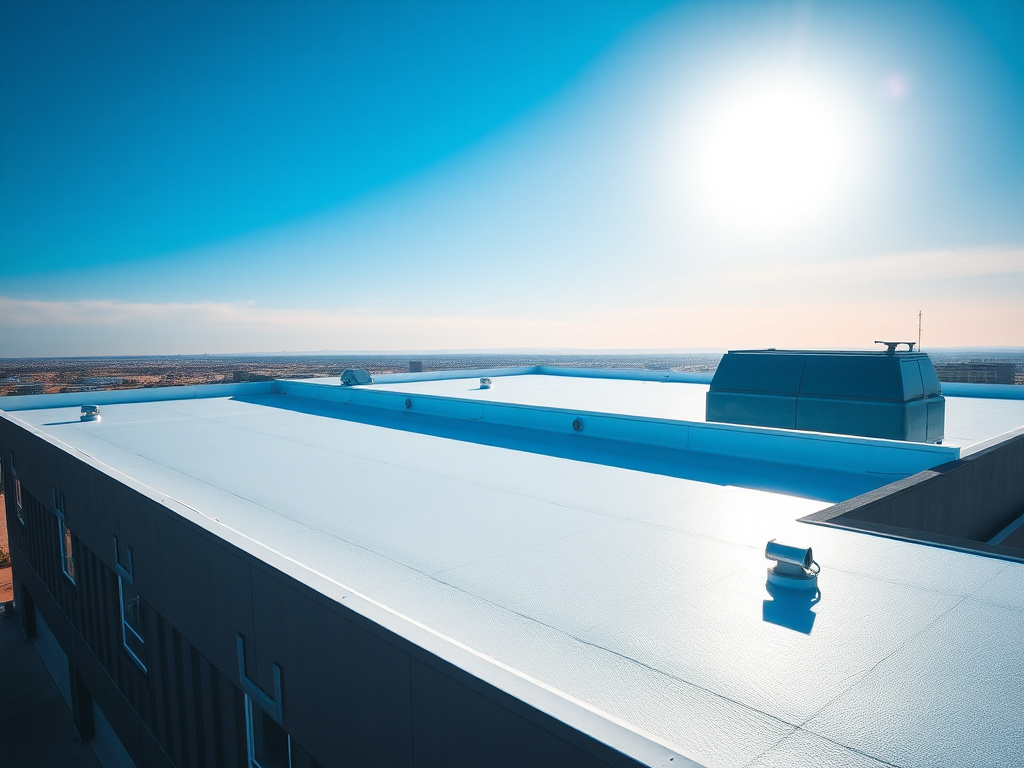
A cool roof does two separate jobs, and both matter more in Phoenix than in most other markets. First, spray foam itself is an insulator — it carries real R-value that slows heat transfer from the roof deck into the attic or building interior, which is a bigger factor here because Phoenix's urban heat island keeps both roof surfaces and overnight air measurably hotter than the surrounding desert towns. Second, the reflective elastomeric topcoat sprayed over that foam — white or light-colored, with a real solar reflectance rating — bounces the bulk of incoming solar radiation back off the roof instead of letting it absorb into the membrane and radiate downward all afternoon and into the evening.
Put those two together and the roof itself stops acting like a heat battery. A dark, non-reflective roof surface can run dramatically hotter than the surrounding air on a Phoenix summer afternoon, and that stored heat keeps pushing into the building for hours after the sun goes down — which is exactly the mechanism behind Phoenix's well-documented nighttime urban heat island effect. A reflective foam roof interrupts that cycle at the source, which is why cooling-load reduction is the entire premise behind both utilities' rebate programs and the city's code requirement below.
This isn't limited to buildings getting a brand-new foam roof, either. A coating upgrade during a scheduled recoat cycle can move an aging, chalked-out roof from a middling reflectance rating back up to a CRRC-qualifying one, which means the rebate and code conversation below applies just as much to a roof you already own as to a new install.
Utility rebate programs
What SRP and APS currently offer toward a cool roof
Which program applies to you depends on which utility serves your property, not on which one offers the better number. Here's how each is currently structured.
SRP Cool Roof Rebate
For SRP customers, the residential cool-roof rebate is currently structured at $0.30 per square foot, up to a $600 maximum per home, for qualifying low-slope roofs. Commercial retrofits are rebated separately — currently $0.10 per square foot for spray- or paint-applied coatings, or $0.20 per square foot for membrane systems. Qualifying product has to carry a Cool Roof Rating Council (CRRC) rating and generally needs to meet SRP's reflectance and warranty thresholds, including a minimum 7-year product warranty.
Confirm current program details and dollar amounts with SRP before relying on this figure — rebate programs are adjusted from time to time, and we'll pull the current terms when we scope your project rather than quoting last year's numbers.
APS Cool Roof Rebate
For APS customers, the cool-roof rebate is currently structured at $0.75 per square foot, with a per-customer maximum of $50,000. APS has also offered a reduced 0.5% APR financing option for qualifying cool-roof projects, which can make a larger commercial re-roof or recoat more manageable to schedule without waiting for a full budget cycle.
Confirm current program details and dollar amounts with APS before relying on this figure — the rebate amount, cap, and financing terms are all set by APS and can change, and we'll verify what's currently available before you commit to a project.
- ✓CRRC (Cool Roof Rating Council) product rating typically required by both utilities
- ✓Minimum 7-year product warranty commonly required for SRP rebate eligibility
- ✓Which utility serves your property (SRP vs. APS territory) determines which program applies
- ✓Rebate applications are typically submitted after — not before — qualifying work is completed
City of Phoenix code
A real cool-roof code requirement, not just a recommendation
Beyond the utility rebates, the City of Phoenix has a cool-roof requirement written into its building code for most low-slope roofs. For roofs with a pitch under 2:12 on new construction, and on re-roofing projects that affect more than 50% of the roof area, the code currently calls for a minimum initial solar reflectance of 0.70 and a minimum thermal emittance of 0.75. This applies primarily to commercial and multifamily buildings, and certain conditions — historic structures, rooftop equipment zones, and some vegetated roof sections among them — are typically exempt.
Confirm the current code cycle, thresholds, and exemptions with City of Phoenix Development Services before relying on this figure — code cycles are adopted and amended periodically, and a project's exact applicability depends on details (occupancy type, roof pitch, percentage of roof being replaced) that are worth confirming with the city directly before design decisions are finalized.
| SRP Residential Rebate | $0.30 / sq ft, up to $600 per home |
|---|---|
| SRP Commercial Rebate (spray/paint) | $0.10 / sq ft |
| SRP Commercial Rebate (membrane) | $0.20 / sq ft |
| SRP Product Requirement | CRRC-rated product, minimum 7-year warranty |
| APS Rebate | $0.75 / sq ft, max $50,000 per customer |
| APS Financing Option | Reduced 0.5% APR financing (qualifying projects) |
| City of Phoenix Code — Solar Reflectance | Minimum initial reflectance 0.70 (low-slope, <2:12 pitch) |
| City of Phoenix Code — Thermal Emittance | Minimum thermal emittance 0.75 |
| City of Phoenix Code — Trigger | New construction, or re-roofs affecting >50% of roof area (exemptions apply) |
Figures current as of this page's last review. Utility programs and code cycles change — confirm current amounts and thresholds with SRP, APS, or City of Phoenix Development Services before relying on any number here.
$0.30-$0.75
Per sq ft, current utility rebate range
0.70 / 0.75
City code min. reflectance / emittance
7 Years
Min. product warranty (SRP)
>50%
Re-roof trigger for code applicability
Paperwork support, not a guarantee
How we help you document and apply — without promising an outcome
Rebate and code paperwork is where a lot of cool-roof projects stall, not the roofing work itself. Utilities want specific product documentation — CRRC rating sheets, warranty terms, application dates — and code compliance on a commercial re-roof usually means submitting reflectance and emittance values that match what was actually installed. We handle the roofing side of that documentation as part of the job: product spec sheets, CRRC certification numbers, and warranty paperwork organized in the format each program currently asks for.
What we won't do is promise you a rebate amount or a code approval before either SRP, APS, or the City of Phoenix has actually reviewed your submission. Program terms, funding availability, and code interpretation belong to those organizations, not to us — our job is making sure your application isn't the reason it gets held up.
What we help pull together
- ✓CRRC product rating documentation for the coating installed
- ✓Manufacturer warranty paperwork (7-year minimum, where required)
- ✓Application timing guidance for SRP and APS submission windows
- ✓Reflectance/emittance values for City of Phoenix code documentation
Related services
Whether you need a new coating or a recoat on an existing foam roof
SPF Roof Installation
New spray foam roof installations are finished with a reflective topcoat from day one — the cool-roof performance and rebate eligibility above is built in, not bolted on.
Foam Roof Recoating
An existing foam roof due for a recoat is often the simplest path to a rebate-qualifying reflective surface — no new foam application required.
See if your roof qualifies for a cool-roof rebate
Tell us about your property and current roof, and we'll walk you through current SRP or APS rebate eligibility and City of Phoenix code requirements as they stand today.