Residential SPF roofing
Residential Spray Foam Roofing for Phoenix Homes
Seamless foam roofing for the flat and low-slope sections of Phoenix homes — additions, patios, casitas, and the full flat-roof ranch homes that make up so much of the Valley's mid-century housing stock.
Not every Phoenix home has a pitched roof
Built for the Valley's flat-roof home stock
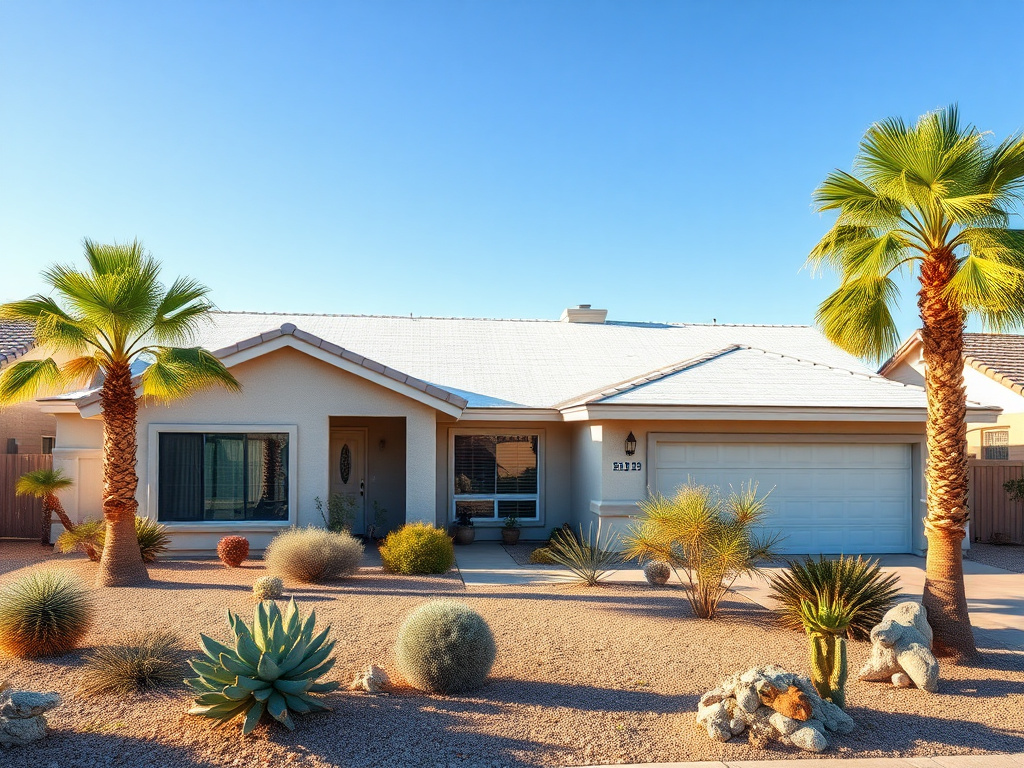
A lot of roofing content assumes every home has a shingled, pitched roof. Phoenix doesn't work that way. Entire neighborhoods of mid-century ranch homes across the Valley — including large stretches of Ahwatukee and Arcadia — were built with fully flat or very low-slope roofs, and even homes with a pitched main roof usually have at least one flat section: a rear addition, a covered patio, a casita, or a garage tie-in that a shingle crew has no good answer for.
Spray polyurethane foam is built for exactly that condition. It's sprayed on-site as a liquid that expands and cures into a seamless, fully adhered membrane, so it follows whatever shape the roof deck actually is — flat, gently sloped, or a patchwork of add-on sections — without the transition seams and flashing compromises that come with tying a shingle roof into a flat one.
Most of the flat-roof homes we work on across Ahwatukee, Arcadia, and similar mid-century Phoenix neighborhoods are on their second or third built-up roof since the house was framed, because a traditional flat roofing system in this climate has a shorter practical service life than most homeowners expect. A properly installed and maintained SPF system is built to outlast that cycle by a wide margin, and because it's renewed with a recoat rather than replaced outright, the same roof can stay under warranty far longer than a comparable built-up or shingle system ever would.
- ✓Flat or low-slope full-home roofs on mid-century Phoenix ranch homes
- ✓Additions, room conversions, and enclosed patios with a flat tie-in
- ✓Casitas and detached guest structures with their own roof section
- ✓Garage and carport flat sections attached to an otherwise pitched roof
What install day actually looks like
What to expect during the install
Homeowners usually have three questions before they commit: how loud is it, how long does it take, and does the crew need to be inside the house. Here's the honest answer to all three.
Noise. The spray rig itself runs on the roof, not inside the house, and most of what a homeowner hears is the compressor and generator staging in the driveway or side yard rather than anything coming through the ceiling. It's comparable to yard equipment running outside — noticeable, not disruptive enough to require leaving the home for most single-day jobs.
Timeline. A typical flat-roof section on a home — a casita, patio cover, or an addition — is usually a one-day job for application and topcoat. A full flat-roof ranch home runs longer depending on square footage and roof condition, and we scope the exact timeline on the estimate visit rather than quoting a generic number.
Access. The crew works entirely from the roof and exterior — ladder and roof access only. Interior access is only needed if there's an active leak we need to trace back to its source from inside an attic space first.
Permits. Most Valley municipalities require a roofing permit for a residential re-roof or new flat-roof install, and the permit is pulled and inspected the same way whether the finished surface is foam or a traditional material. We handle the permit application as part of the install rather than leaving it for the homeowner to sort out separately.

Live in a governed community?
Coating color, and the HOA conversation that comes with it
A finished foam roof isn't left as bare foam — it's always sealed with a protective topcoat, and that topcoat comes in a range of colors, from bright reflective white to tan and earth-tone finishes that blend with a tile or stucco palette. Which color makes sense depends on two things: how visible the roof section is from the street or from a neighboring two-story home, and whether the home sits inside an HOA-governed community.
A large share of Valley growth over the last few decades — much of Ahwatukee, Chandler, Gilbert, Paradise Valley, and parts of Scottsdale and Mesa — sits inside master-planned communities with an architectural review committee that has an opinion about roof color and visibility, sometimes down to the specific finish on a flat-roof addition. If that's your situation, don't guess at a color before talking to your HOA. Our HOA-Compliant Roofing page covers the color ranges we see most often get approved, how the architectural-review submission process typically works, and where a light, reflective coating satisfies both the HOA's aesthetic rules and the energy-savings case below at the same time.
In practice, the process is straightforward once you know the sequence: we spec the coating product and color, provide the spec sheet and any sample the committee asks for, and the homeowner submits that package through their HOA's standard architectural-review request before work starts. Turnaround varies by community — some approve a like-for-like recoat color quickly, while a full color change or a first-time flat-roof install on a visible section can take longer. We schedule the install date around that approval, not before it.
Built for monsoon season, not just summer heat
What Phoenix's monsoon season means for a flat home roof
A flat or low-slope home roof faces a different set of monsoon-season risks than a pitched shingle roof. Wind-driven rain and dust from a haboob collect in low spots instead of running straight off, and a roof that was never sloped correctly to begin with — common on older Phoenix ranch homes and patio additions — is exactly where standing water sits longest between storms. Left alone, that ponding accelerates wear on the coating and eventually finds any weak seam or penetration around a vent, skylight, or AC curb.
A properly installed SPF roof addresses both problems at once: the seamless membrane gives wind-driven rain nowhere to work its way underneath, and because foam depth can be varied during install, a patio addition or casita roof that currently holds water can be corrected to drain properly instead of just re-coated over the same low spot. If you're dealing with an active leak rather than planning ahead of one, see our Roof Leak Repair page for faster-response service.

The room under the roof feels it too
Attic and interior comfort, not just roof performance
A dark shingle section absorbs far more solar heat than a reflective foam-and- topcoat system, and on a Phoenix roof that difference compounds daily through the summer — the surface heats up, transfers that heat into the attic or the space below, and the HVAC system has to work harder to keep up. Homeowners who replace an aging dark flat-roof section with reflective SPF commonly notice the room or attic space directly underneath running noticeably cooler, especially in a garage conversion, casita, or addition that previously ran uncomfortably hot in July and August.
That matters most on the mid-century sections of Phoenix homes that were built with minimal roof insulation to begin with — a converted garage or an older casita addition often has far less attic depth to work with than a modern build. Foam's insulation value is applied directly at the roof deck rather than relying on loose-fill attic insulation, which is one reason it's a common fix for the specific rooms in a Phoenix home that everyone already knows run hotter than the rest of the house.
Seamless
Fully adhered membrane
Any Slope
Flat to low-slope decks
Reflective
Topcoat finish
HOA-Ready
Color range options
Still deciding between systems?
How foam actually compares to a traditional shingle roof
Foam isn't the right call for every roof — a steep-pitch shingle section doesn't need it and won't take it well. But for the flat and low-slope sections this page is about, the comparison against traditional materials on cost, lifespan, repairability, and how each holds up under a Phoenix summer is worth reading before you commit either way.
It's a common question from homeowners replacing a failed built-up or modified-bitumen flat section for the first time: is a foam system worth paying more upfront than a straight tear-off-and-replace with the same traditional material? The honest answer depends on how long you plan to own the home and how much you value not repeating the same re-roof again in a decade — both of which the comparison page below addresses directly, without oversimplifying it into a single sales pitch.
- ✓Upfront cost vs. long-term recoat cycle, side by side
- ✓How a seamless membrane holds up against seamed shingle transitions
- ✓Repair scope: spot-patch a foam roof vs. tear-out on a failed shingle section
- ✓Where a traditional roof still makes more sense than foam
Read the full breakdown on our Spray Foam vs. Traditional Roofing comparison page.
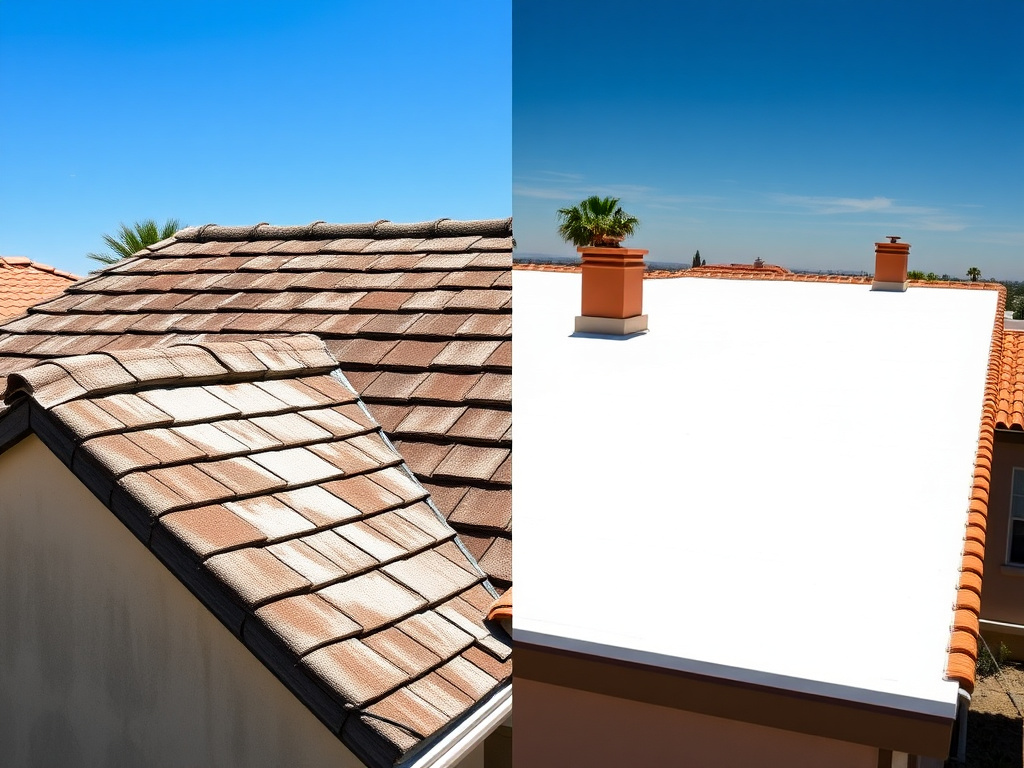
This service covers the full range of residential flat and low-slope roofing across the Valley — a single patio-cover recoat, a casita or guest-house install, a garage conversion tie-in, or a complete flat-roof ranch home. The scope and the crew are the same either way; only the timeline and the price change with the square footage.
We work Phoenix, Scottsdale, Paradise Valley, Tempe, Mesa, Chandler, Gilbert, Glendale and Ahwatukee. See your neighborhood, and which of our other services are most common in it, on our Service Areas page.
Get a free residential roof quote
Tell us about the flat or low-slope section on your home — size, age, and whether your HOA has color rules. We'll come back with a scoped, itemized number, no obligation.