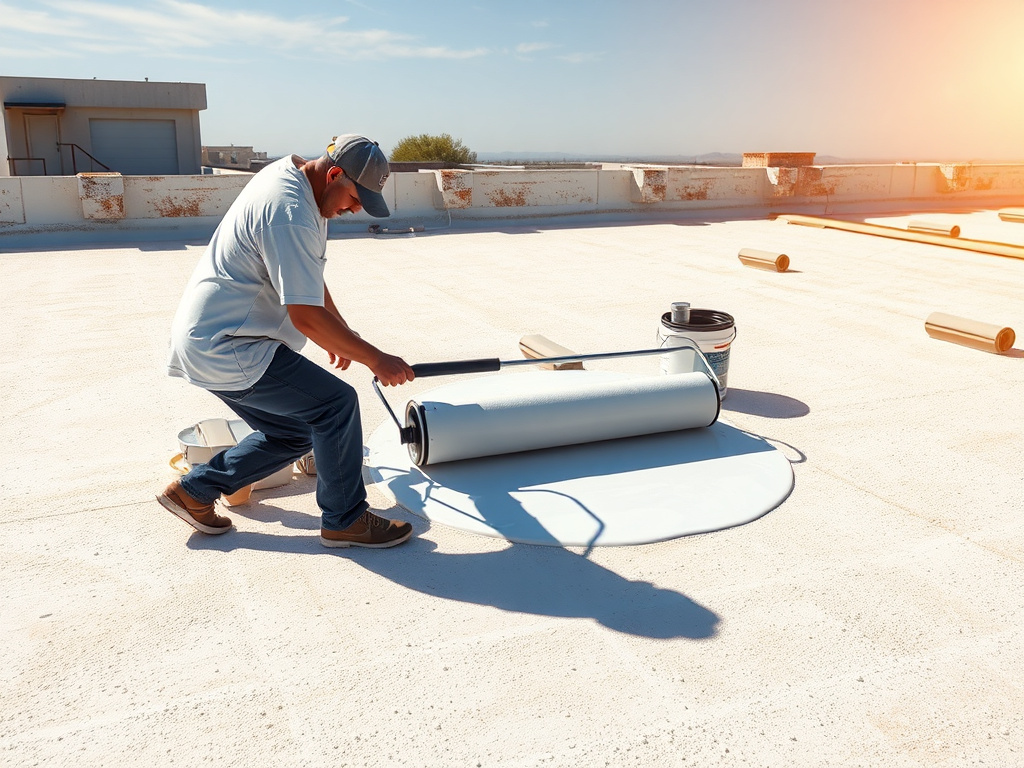
Recoat, Don't Replace
Foam Roof Recoating for Phoenix's Aging SPF Roofs
A silicone or acrylic recoat on a 10-20 year cycle is what keeps a Phoenix SPF roof under warranty indefinitely — no tear-off, no new foam, just a renewed protective topcoat over foam that's still sound.
The recoat cycle
Why SPF roofs almost never have to be "replaced"
The foam core of an SPF roof is designed to last for decades — the part that wears is the protective topcoat sitting on top of it. Manufacturers spec a recoat cycle, typically every 10 to 20 years depending on the coating chemistry and sun exposure, and applying a fresh topcoat before the old one fully breaks down is what keeps the underlying foam protected and the roof under warranty without interruption.
That's the fundamental difference between an SPF roof and a shingle or built-up system: instead of tearing off and replacing the whole roof at the end of its service life, you're renewing a topcoat over foam that's still doing its job. If your roof doesn't have an SPF system installed yet, start with SPF roof installation instead — this page covers recoating an existing foam roof.
A recoat scope looks a little different on a commercial building than on a home, but the underlying job is the same either way: clean the existing topcoat, address any small trouble spots, and apply a new coating system rather than disturbing the foam underneath. On a warehouse or strip retail roof that might mean coordinating access around an occupied building; on a Valley ranch home it's usually a straightforward day or two once the roof is scoped. Either way, a recoat done on schedule is what keeps the manufacturer's warranty on the underlying foam intact for the life of the roof.
None of this requires guesswork on your part. We'll tell you plainly whether your roof is due, close, or still years out based on what we actually see on the surface — not on a generic calendar reminder unrelated to your specific roof's sun exposure and history.
Why Phoenix wears coatings faster
Phoenix's UV load pushes recoat timing toward the shorter end
The 10-20 year window a manufacturer publishes is a range, not a guarantee, and which end of it a given roof lands on comes down almost entirely to sun exposure. A roof baking under direct Phoenix sun for months on end, with surface temperatures regularly running 150-170°F or more, puts far more UV load on a topcoat every year than the same coating would see in a milder climate. That constant UV exposure is the primary driver of chalking — the coating's surface breaking down and shedding a fine, powdery residue — which is the clearest visible sign a topcoat is approaching the end of its protective life.
Phoenix proper compounds that further. The city's urban heat island effect means Sky Harbor-area readings regularly run 10-14°F above outlying Valley towns — a foam roof inside the urban core is carrying more cumulative heat and UV load per year than a comparable roof further out in the desert, which is one more reason a recoat schedule set for a statewide-average climate doesn't always fit a roof sitting in the middle of the metro.
In practice, that means a Phoenix foam roof is more likely to need its recoat scheduled toward the earlier part of the published cycle than a roof in a cooler, less sun-intense region. Waiting past that window doesn't just mean a faded roof — it risks UV reaching the foam itself, which is a bigger and more expensive problem than a recoat.
Daily heat cycling compounds the effect. A topcoat that bakes at 150-170°F+ in the afternoon and then contracts as the surface drops through a 40-60°F+ overnight swing is flexing through that range every day it's in service. A coating already thinned by UV exposure has less flexibility left to absorb that daily movement without micro-cracking, which is one reason worn topcoats here tend to show small surface cracking before a coating in a milder, less heat-cycled climate would.
Scheduling matters here too. A recoat needs a dry surface and a dry cure window, so we plan applications around Arizona's fixed monsoon season — June 15 through September 30 — the same way we do new installs, rather than trying to spray a topcoat between storm cells. Outside that window, Phoenix's long stretch of dry, sunny weather actually works in a recoat's favor, giving a wide practical scheduling range once the monsoon window closes.
Choosing a topcoat
Silicone vs. acrylic: the tradeoffs for a Phoenix roof
Both are viable topcoat systems for SPF, and the right call depends on your roof's drainage and how long you plan to hold the building. Here's how they compare for Valley conditions.
| Ponding-water resistance | Silicone holds up well under standing water; acrylic can soften and degrade faster where water sits after a monsoon downpour. |
|---|---|
| UV stability | Silicone resists UV breakdown and chalking longer under sustained Phoenix sun exposure, generally supporting the longer end of the recoat cycle. |
| Reflectivity | Acrylic offers strong reflectivity at a lower material cost, which can be the more economical choice on a well-draining roof. |
| Upfront cost | Acrylic typically costs less per square foot than silicone, making it attractive for budget-driven recoat cycles on low-ponding roofs. |
| Cold-weather cure | Phoenix's near-zero winter freeze risk removes a limitation that affects both coatings in colder climates, widening the practical application season here. |
Silicone generally wins on roofs with any standing water or heavy sun exposure; acrylic remains a sound, lower-cost option on well-sloped roofs that drain quickly.
Phoenix's near-zero winter freeze risk works in favor of both systems compared to a colder-climate roof, where freeze-thaw cycling can crack a coating regardless of chemistry. Here, the deciding factor is almost always ponding and sun exposure rather than cold-weather durability — which is why we walk the roof and check drainage before recommending one system over the other rather than defaulting to a single product for every job.
Neither system is inherently the better choice on paper — a silicone recoat on a roof that never sees standing water is spending money on ponding resistance it may not need, and an acrylic recoat on a roof with a persistent low spot near a scupper is likely to wear faster there than across the rest of the field. The right answer is specific to your roof's drainage and sun exposure, which is why it's one of the first things we walk through during an inspection rather than something we decide before ever seeing the roof.
Signs to watch for
Signs a Phoenix foam roof needs recoating
Most of these show up gradually over a handful of Phoenix summers rather than overnight, which is exactly why they're easy to miss from the ground. Catching them early is what keeps a recoat a routine maintenance job instead of turning into a bigger repair once UV has reached the foam underneath.
- ✓Chalking — a fine, powdery residue on the surface that rubs off on your hand
- ✓Visible discoloration or fading from the original topcoat color
- ✓Thin spots or worn patches after repeated summers of direct sun exposure
- ✓Small cracks or crazing in the topcoat surface, especially around seams and penetrations
- ✓Granular loss or exposed foam texture showing through the coating
- ✓A topcoat that's noticeably past its manufacturer-published recoat interval
None of these signs mean an emergency by themselves — a chalking topcoat on foam that's otherwise sound is a scheduling decision, not a same-day call. But they're worth acting on within a season or two of noticing them rather than waiting for multiple signs to stack up at once. Pairing a visual check like this with a scheduled maintenance inspection before and after monsoon season is the easiest way to catch a recoat window early instead of discovering it after a storm finds the weak spot for you.
Recoat vs. replace
Why a recoat almost always costs less than starting over
A recoat only involves cleaning the existing surface, spot-repairing any thin areas or minor damage, and applying a fresh topcoat — there's no tear-off, no new foam application, and none of the substrate work a new installation requires. That makes it substantially less expensive than a full roof replacement, provided the foam underneath is still structurally sound.
A typical recoat visit runs through the same basic sequence regardless of building size: pressure-wash or otherwise clean the existing topcoat, let it dry fully, patch any thin spots or small damaged areas with a compatible repair material, then apply the new coating in the specified thickness and let it cure before foot traffic or equipment returns to the roof. On a home or small commercial roof that's usually a one- to two-day job; larger commercial roofs scale up from there based on square footage and access.
A recoat quote moves on a narrower set of variables than a new install, but the same walk-the-roof principle applies before we put a number in front of you:
- Roof size and access — total square footage and how equipment reaches the roof.
- Surface prep and repair needed — how much cleaning, patching, or thin-spot repair the existing topcoat requires before a new coat goes on.
- Coating system selected — silicone generally costs more per square foot than acrylic, offset by its longer service life under Phoenix sun and ponding exposure.
- Years since the last recoat — a roof that's gone well past its recommended interval often needs more surface prep and repair than one recoated on schedule.
The math only changes if a roof has gone past recoating — foam that's saturated, delaminating, or damaged below the surface generally can't be fixed with a topcoat alone and needs a new install instead. An inspection is what tells you which side of that line your roof is on. If you're weighing the two options in more detail, our spray foam vs. traditional roofing comparison covers lifespan and cost side by side, and our service area page lists the Valley cities we recoat in.
If you're not sure which side of that line your roof falls on, that's a normal question to have before spending money either way — send us a few photos of the roof, or request an on-site look, and we'll give you a straight answer on whether a recoat, a spot repair, or a full new install is the right call before we ever quote a price.
Not sure if your roof needs a recoat?
Send us a few photos or request an inspection and we'll tell you honestly whether a recoat, a repair, or a full install is the right call — then price it in a free quote.